Aligning Rewards Systems with Volatility Metrics in Hybrid Casino Sessions
Drew Schmitt · Sep 5, 2026
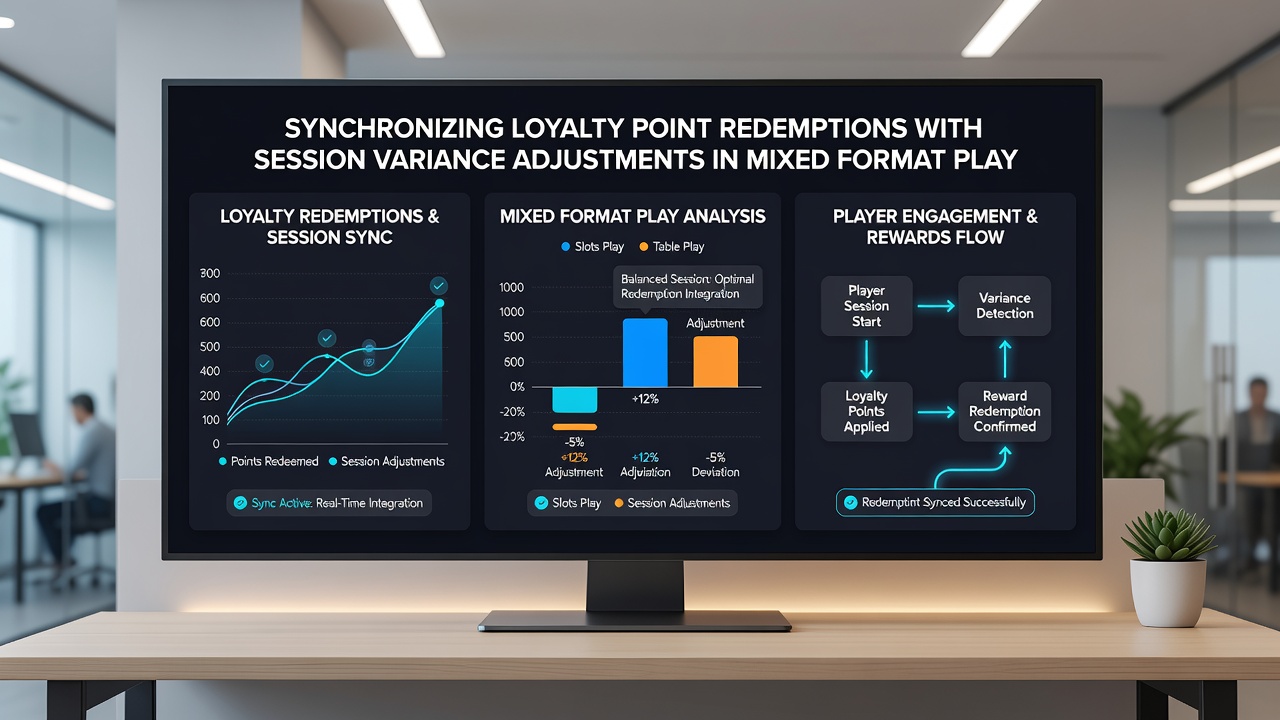
Aligning Rewards Systems with Volatility Metrics in Hybrid Casino Sessions
Operators in mixed-format environments face ongoing challenges when integrating loyalty point redemptions with real-time variance adjustments, since players often switch between high-volatility slots and lower-variance table games within single sessions. Data from the Nevada Gaming Control Board shows that session tracking systems now incorporate volatility indices to recalibrate point accrual rates, ensuring redemptions reflect both time spent and risk exposure rather than raw handle alone.
Systems analysts at major properties report that algorithms adjust loyalty multipliers based on game-specific variance coefficients, so a player moving from a 95% RTP slot to blackjack receives point values scaled to account for expected deviation in outcomes. This approach prevents over-redemption during short sessions dominated by variance spikes while maintaining fairness across extended play periods.
Core Mechanics of Variance-Adjusted Redemptions
Modern platforms calculate session variance through standard deviation models applied to theoretical win percentages, then synchronize those figures with loyalty ledgers at redemption checkpoints. Researchers at the University of Nevada, Reno have documented how these models use historical play data to predict deviation ranges, allowing operators to apply tiered point values that stabilize reward distribution even when individual results deviate sharply from expected returns.
One implementation involves dynamic weighting where points earned in high-variance segments carry reduced redemption value until the overall session variance normalizes, a method tested across several North American properties since early 2025. Industry reports indicate this reduces premature cash-outs that previously strained comp budgets during volatile streaks.
Integration Across Mixed Game Formats
Mixed-format play introduces additional layers because slots generate rapid small outcomes while table games produce slower, larger swings, yet both feed into the same loyalty account. Software providers have developed unified dashboards that log game-type transitions and apply variance buffers accordingly, so points from a 30-minute slot session receive different treatment than those from an equivalent time at roulette.
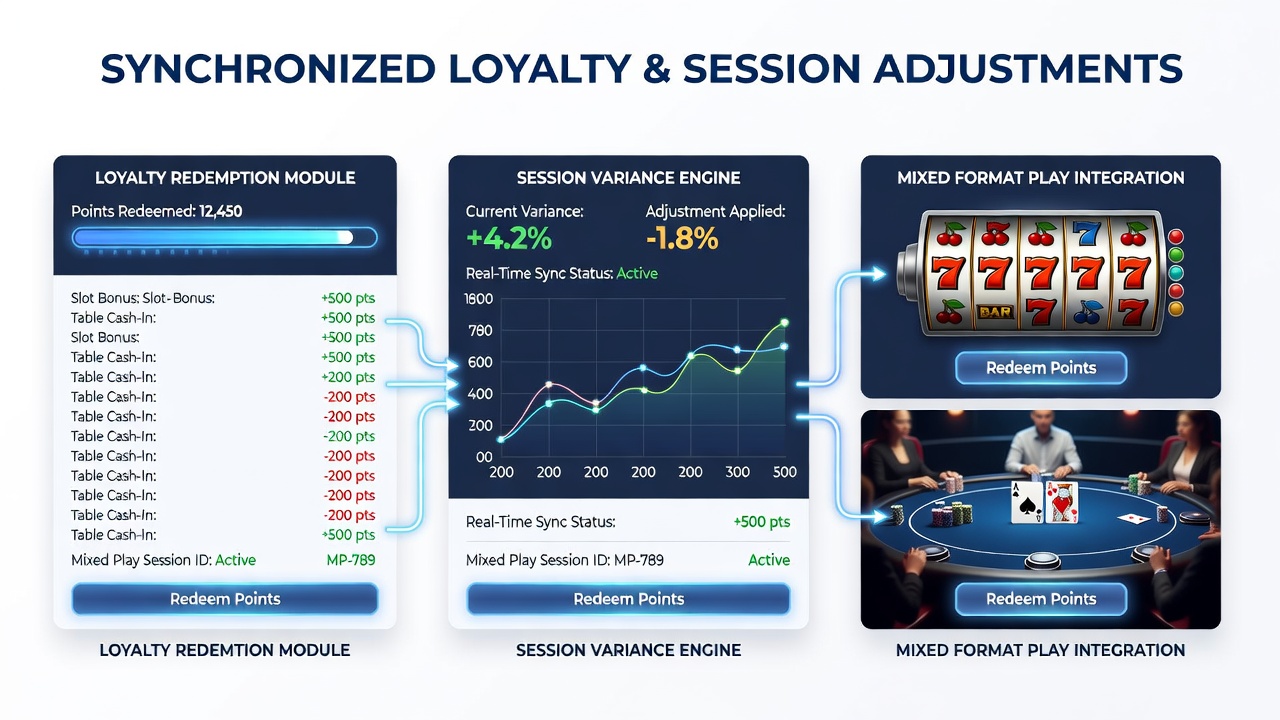
Operators note that September 2026 updates to several major casino management systems will introduce standardized variance APIs, enabling seamless data exchange between disparate game servers. These changes follow pilot programs in Australia where similar synchronization reduced discrepancies in player reward statements by measurable margins.
Practical Implementation Examples
Take one mid-tier property in Atlantic City that adopted variance-linked redemption protocols last year; internal figures revealed a 12% drop in disputed point balances after the system began factoring session standard deviations into final tallies. Players receive real-time previews of adjusted point values on mobile apps, allowing informed decisions about when to redeem without waiting for post-session reconciliation.
Another case involves a Canadian operator linking loyalty tiers to cumulative variance exposure rather than pure volume, which research from the Canadian Gaming Association suggests helps retain players who favor mixed strategies over single-game focus. The approach uses rolling 24-hour windows to smooth adjustments, preventing abrupt changes when users switch formats mid-session.
Regulatory and Technical Considerations
Compliance frameworks in multiple jurisdictions now require documentation of how variance adjustments affect redemption equity, with auditors examining whether algorithms inadvertently favor certain player demographics. Technical teams emphasize the need for transparent calculation logs that players can access upon request, a practice already embedded in some European systems.
Hardware upgrades supporting these features typically include enhanced data feeds from game terminals to central servers, processed through machine-learning models trained on millions of historical sessions. Such infrastructure allows minute-by-minute recalibrations without interrupting play flow.
Conclusion
Synchronization of loyalty redemptions with session variance continues to evolve as mixed-format play grows more common across global markets. Properties adopting these methods report improved accuracy in reward allocation, supported by data from regulatory bodies and academic studies that track long-term player satisfaction metrics. Future refinements will likely incorporate additional variables such as game speed and player history to further refine the balance between volatility and point value.