Color Schemes in Digital Multi-Table Card Platforms Influence Response Intervals
Drew Schmitt · Aug 16, 2026
Color Schemes in Digital Multi-Table Card Platforms Influence Response Intervals
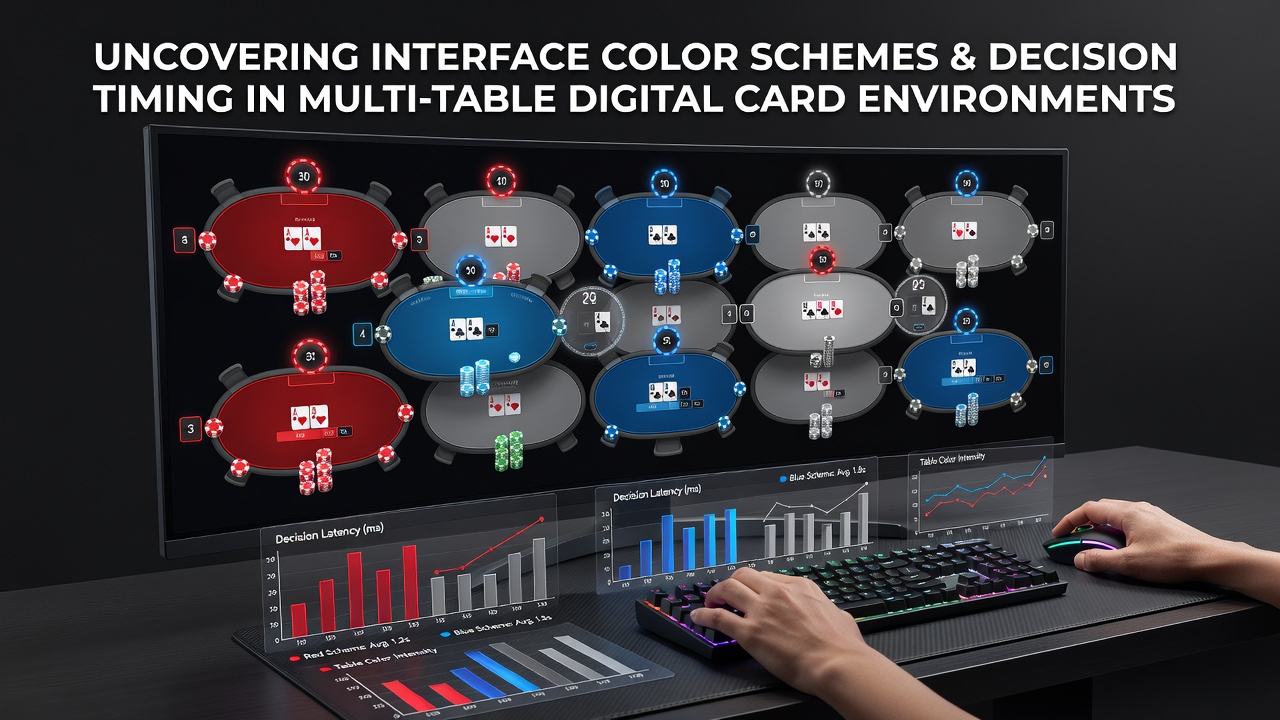
Digital card environments that support simultaneous tables rely on interface design elements to manage player attention across several active hands at once, and researchers have tracked how specific color palettes alter the intervals between card reveals and player actions. Studies conducted by teams at North American universities show that warm tones such as reds and oranges tend to compress decision windows by several hundred milliseconds compared with cooler blues and greens, while neutral grays produce intermediate timing patterns that vary by table count. Observers note that these shifts appear consistently across platforms that host Texas Hold'em, Omaha, and other variants, suggesting the effect stems from visual processing rather than game rules alone.
Platform Architecture and Visual Layering
Multi-table setups require players to monitor separate betting rounds, community cards, and opponent actions within a single screen view, so developers arrange color-coded panels to separate each table's data streams. According to data from a 2025 industry report issued by the Canadian Gaming Research Institute, platforms that assign distinct hue families to active versus idle tables reduce overlap errors and shorten average action times by up to 12 percent in sessions involving four or more tables. Those who've examined eye-tracking logs from controlled tests report that participants shift gaze between tables more rapidly when background elements use saturated versus desaturated palettes, yet the same logs indicate no measurable change in error rates once players exceed six concurrent tables.
Empirical Findings on Hue and Timing
Experiments run at European cognitive science labs during 2024 and early 2025 placed participants in simulated multi-table sessions and recorded response latencies under controlled lighting conditions. Results indicated that red-accented decision buttons produced median reaction times of 1.8 seconds, while identical buttons rendered in teal extended the median to 2.3 seconds. The gap widened further when the number of tables increased from three to five, reaching a difference of 0.7 seconds. Researchers attribute the pattern to heightened arousal responses triggered by longer-wavelength colors, which prime motor preparation without altering accuracy metrics.
Additional trials isolated the contribution of surrounding interface elements, such as chip stacks and card backs. When chip colors matched the dominant table hue, decision timing stabilized; mismatched combinations introduced brief hesitations averaging 250 milliseconds. Data collected across several thousand hands revealed that these micro-delays compound in longer sessions, producing cumulative differences of several minutes per hour of play.
August 2026 Platform Updates and Color Calibration Tools
Software releases scheduled for August 2026 introduce adjustable color calibration sliders that allow operators to modify saturation and contrast for individual player profiles. Preliminary documentation shared by development teams indicates these tools draw on aggregated response data from previous months, enabling platforms to test whether tailored palettes can equalize timing distributions across diverse user groups. Early adopters in North American markets have already integrated similar options into beta builds, and initial telemetry shows reduced variance in action intervals for players managing five or more tables simultaneously.
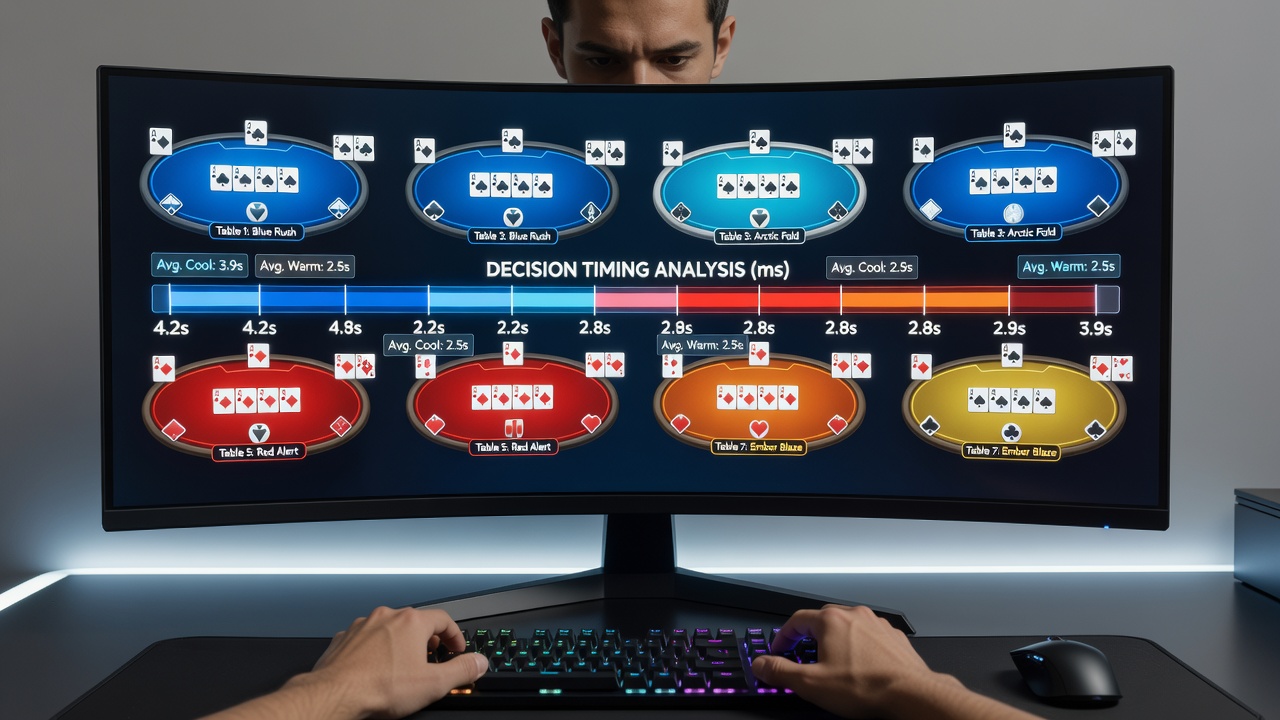
One study released by the University of Melbourne's Digital Interaction Lab linked specific color temperature settings to measurable changes in peripheral attention allocation. Participants using interfaces set to 6500K daylight equivalents maintained steadier timing across tables, whereas warmer 4000K settings accelerated central decisions but slowed responses to peripheral table events. The findings align with broader visual ergonomics literature and have prompted several regional operators to publish calibration guidelines ahead of the August rollout.
Cross-Regional Data Patterns
Comparative analysis of server logs from platforms operating in Asia-Pacific and European jurisdictions reveals consistent directional effects despite differences in regulatory frameworks. Figures compiled by the Asia-Pacific Gaming Association indicate that platforms employing high-contrast accent colors record shorter average decision cycles during peak evening hours, while those relying on muted palettes show more uniform distributions throughout the day. The same dataset demonstrates that players who switch between multiple color presets within a single session exhibit intermediate timing values, suggesting rapid adaptation rather than fixed preference.
Observers tracking these trends note that accessibility features, such as high-contrast modes required in certain jurisdictions, produce their own timing signatures that sometimes override the primary hue effects. In controlled follow-up tests, users who activated these modes experienced decision intervals that converged toward a common range regardless of the base color scheme.
Conclusion
Current evidence establishes clear correlations between interface color schemes and decision timing in multi-table digital card environments, with warm palettes generally shortening intervals and cool palettes extending them. Platform updates planned for August 2026 incorporate calibration options informed by these patterns, and ongoing data collection from multiple regions continues to refine understanding of how visual design interacts with player behavior across varying table counts. Researchers anticipate that further integration of real-time adjustment tools will allow more precise mapping of color parameters to individual response profiles.