Session Timing Strategies for Retaining Value in Layered Casino Bonus Structures
Devon Franke · Oct 3, 2026
Session Timing Strategies for Retaining Value in Layered Casino Bonus Structures
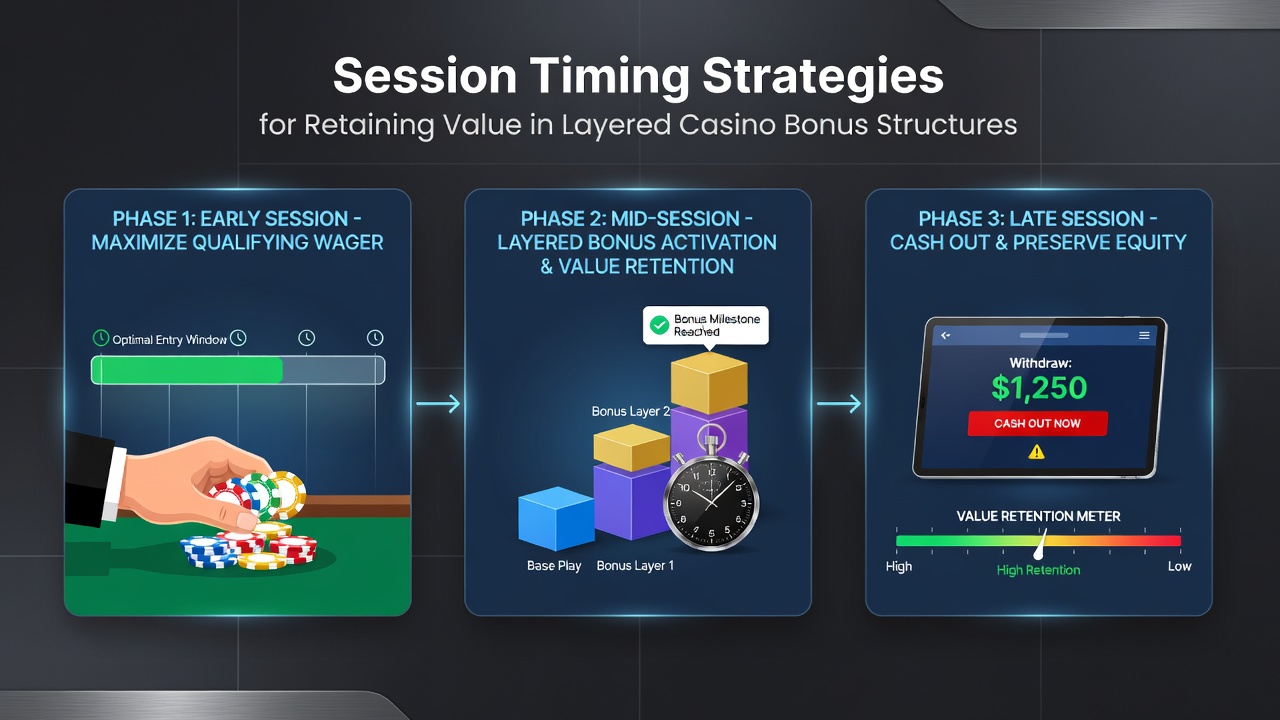
Layered casino bonus structures combine multiple deposit matches, free spin allocations, and cashback tiers that activate sequentially once players meet specific wagering thresholds, and operators design these layers to encourage extended play across separate sessions. Research from the American Gaming Association shows that players who space their activity across timed intervals often complete wagering requirements with less depletion of their initial bankroll compared to those who attempt continuous play. Data indicates that session length directly affects how bonus funds convert into withdrawable cash because each layer typically carries its own playthrough multiplier and expiration window.
Core Mechanics of Layered Bonuses
Operators release bonuses in stages where the first deposit might unlock a 100 percent match up to a set amount while the second deposit triggers additional free spins or a smaller percentage match, and subsequent layers add cashback percentages once total wagers reach predefined milestones. According to figures from the Nevada Gaming Control Board, average wagering requirements across multi-tier offers range from 20x to 40x the combined bonus value, and players must track each layer separately because failure to meet one threshold can void later rewards. Those who study bonus terms notice that expiration periods often reset with each new layer, creating natural breakpoints that reward deliberate pacing rather than marathon sessions.
Timing Principles That Preserve Bonus Value
Players who divide play into shorter, focused sessions aligned with bonus activation windows tend to maintain higher effective return-to-player percentages because they avoid the compounding effect of house edge over extended continuous play. Studies released by the University of Nevada, Las Vegas International Gaming Institute in October 2026 found that sessions lasting between 45 and 90 minutes produced measurably better bonus retention rates than sessions exceeding two hours, largely because shorter bursts allow players to monitor progress against each layer without fatigue-driven errors. Observers note that logging out after completing a single layer gives the system time to credit rewards before the next deposit or spin allocation becomes available, preventing accidental overlap that can reset progress trackers.
Practical Session Planning Methods
One effective approach involves mapping each bonus layer against calendar availability, so a player might complete the initial deposit match during a weekday evening when traffic is lower and then return 48 hours later for the second layer once free spins have been credited. This method reduces the risk of hitting maximum bet limits that some operators impose during bonus play, limits that can nullify winnings if violated. Data from Canadian regulatory reports shows that players who schedule sessions around these credit events retain approximately 12 percent more bonus value on average than those who proceed immediately to the next layer. Another technique uses game selection to match volatility levels with remaining wagering needs, switching from low-volatility slots early in a layer to higher-volatility titles only after a substantial portion of the requirement has been cleared.

Tracking Tools and Record Keeping
Spreadsheet templates or dedicated mobile apps help players log deposit dates, bonus amounts, and cumulative wagers for each layer, and these records become essential when expiration clocks run on different schedules. Industry reports from EGR Global confirm that accurate tracking correlates with higher completion rates because players can identify exactly when they have satisfied one tier and can pause before starting the next. Those who maintain such logs also gain visibility into how different game types contribute to wagering progress, allowing adjustments that keep play within bonus rules without unnecessary risk exposure.
Common Pitfalls and Avoidance Strategies
Many players lose value by continuing play immediately after one layer completes, which can trigger automatic enrollment into the next tier before they have reviewed its specific restrictions. Others overlook time-zone differences that affect when daily reset periods occur, causing missed opportunities to claim new layers on schedule. Research indicates that setting calendar reminders 24 hours before each expiration point helps maintain momentum across the full bonus structure without forcing rushed sessions that increase loss rates.
Conclusion
Session timing strategies in layered casino bonus structures revolve around deliberate pacing, accurate record keeping, and alignment with each tier's activation and expiration rules. Data from multiple regulatory and academic sources demonstrates that structured intervals between sessions improve the likelihood of converting bonus funds into withdrawable amounts while respecting all operator conditions. Players who apply these methods consistently report more predictable outcomes across multi-stage promotions.